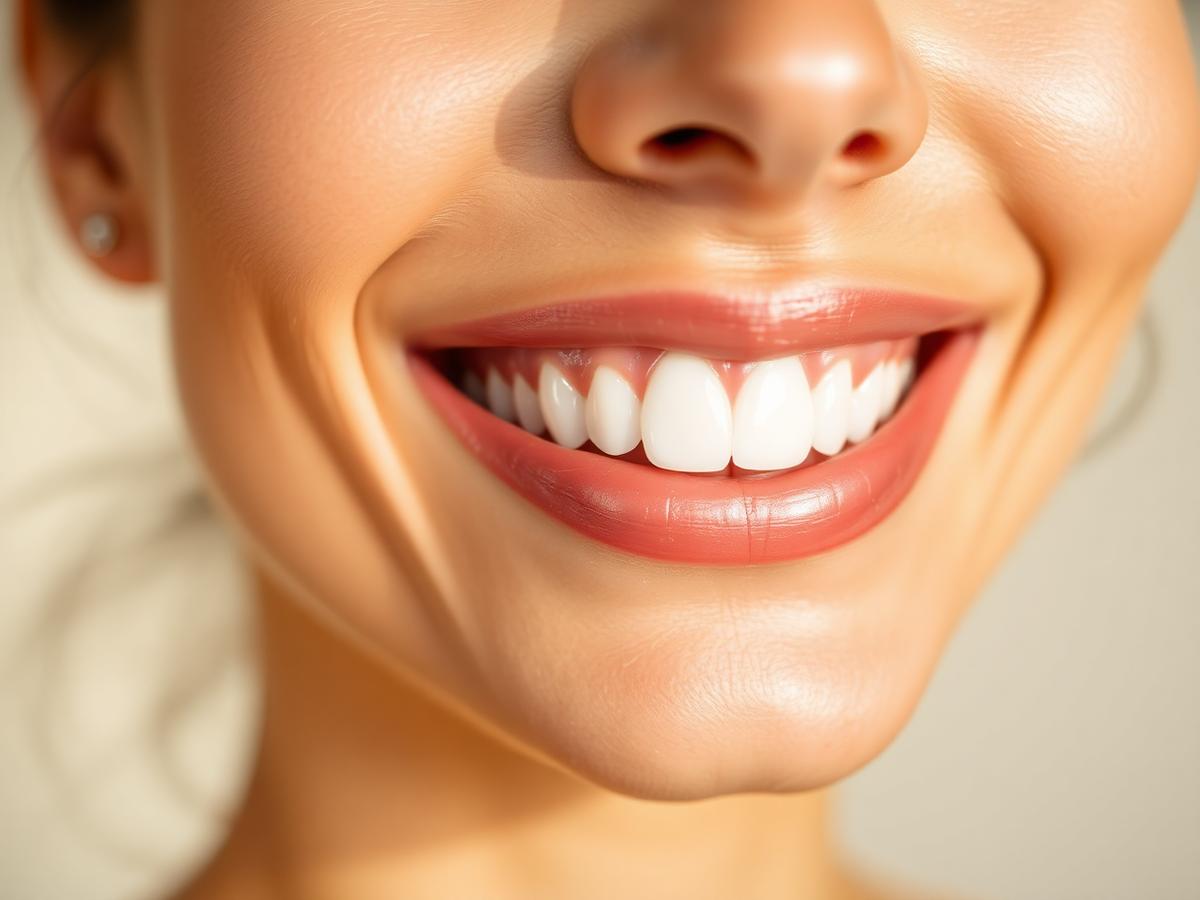
Cosmetic services
Options planned as one picture
Porcelain veneers
Thin, custom restorations bonded to the front of teeth to refine shape, color, spacing and symmetry. Planning considers proportion, the way light moves across the surface and how the result fits your face.
- Addresses chips, wear, discoloration, minor spacing and irregular shape.
- Requires enamel preparation in most cases; candidacy depends on examination.
- Porcelain does not respond to whitening, so shade is planned in advance.
Professional teeth whitening
Whitening under dental supervision begins with an evaluation, because stains, restorations and underlying conditions respond differently. A shade plan considers the whole smile, including existing dental work.
- Evaluation first to identify the cause of discoloration.
- Crowns, veneers and fillings do not lighten with whitening agents.
- Temporary sensitivity is possible and should be discussed.
Clear aligners
A discreet way to address crowding, spacing, rotation and bite-related concerns in appropriate cases. Alignment is sometimes completed before restorative or cosmetic work so less tooth structure needs to change.
- Removable for eating and cleaning; consistent wear affects results.
- Not every case is suitable for aligner treatment.
- Retention is required to help maintain the result.
Dental bonding
Tooth-colored composite applied and shaped directly on the tooth for conservative repair and refinement. The craftsmanship is in the contour: edge shape, surface texture and how the material blends with adjacent teeth.
- Often preserves more natural tooth structure than a veneer.
- Composite can stain or chip over time and may need maintenance.
- Well suited to small chips, edges and minor reshaping.
Crowns and bridges
Crowns restore strength and shape to damaged, worn or heavily restored teeth. Bridges replace missing teeth using neighboring teeth for support. Both are planned for function, fit and a natural appearance.
- Material and shade selected to match surrounding teeth.
- Bite and contact points evaluated for long-term comfort.
- An implant may be an alternative to a bridge in some cases.
Dental implants
Implants replace the root of a missing tooth and support a crown, bridge or other restoration. Treatment is staged over time and depends on bone, gum health and overall medical considerations.
- Candidacy is determined by examination and diagnostic records.
- Can replace a single tooth without altering neighboring teeth.
- Implants require ongoing hygiene and professional monitoring.
Smile makeovers
A makeover is a coordinated plan rather than a menu of procedures. Several treatments are sequenced so color, shape, alignment and function work together and the result still looks like you.
- May combine whitening, alignment, bonding, veneers and restorations.
- Treatment can often be completed in phases.
- Cost and timing depend on the individualized plan.
Candidacy, timing and cost for any treatment depend on an examination and an individualized plan. Results vary by patient.
Your cosmetic consultation
How a plan comes together
- 01
Describe what you would like to change and what you would like to keep.
- 02
Dr. Patel examines your teeth, gums, bite and the way your smile relates to your face.
- 03
Appropriate options, sequencing, tradeoffs and maintenance are reviewed together.
- 04
You decide how and when to proceed, in one phase or several.